

At every Celtic home game, as the teams line up to enter the pitch at Celtic Park, one well-known tune echoes around the ground…
The Celtic Song by Glen Daly is one of football’s most recognisable tunes and is played to welcome the Bhoys in green onto the park. The first time was 14 October 1961, but in fact, its origins go back into the nineteenth century. And it is one that the police would later try to ban.
This is the story of the famous Celtic Song.
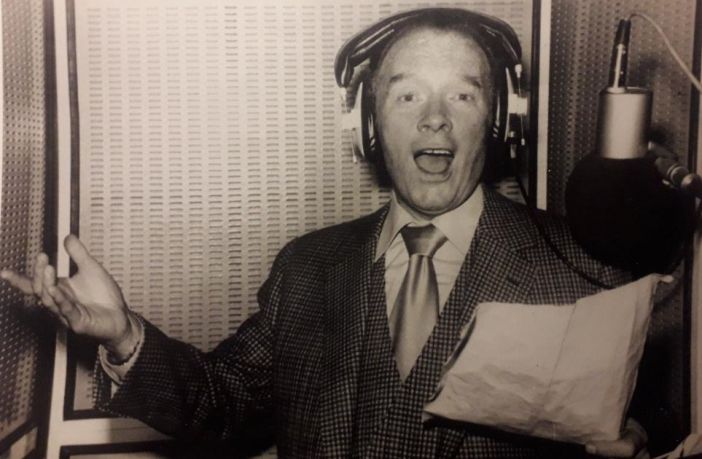
Glen Daly
Although the song was first recorded in 1961, its story begins well before this. Firstly, there is the issue of Glen Daly, the man whose voice brought the tune to life.
Daly was a famous Scottish entertainer who was born in Glasgow’s Calton district on 11 April 1920. His real name was Bartholomew Dick, and he adopted the Daly name as his stage persona.
After going to St Mary’s School – another institution with a fine Celtic link – he worked in Glasgow’s shipyards but had dreams of a different life. His talents as a singer and comedian made him a popular music hall performer throughout Scotland.
Daly also found fame in pantomimes and on TV, appearing on numerous occasions on shows such as The White Heather Club.
By the early-1960s, he was a well-known figure in Scottish entertainment. But it was singing a tune in celebration of another Glasgow east end institution that he became best remembered, even following his death in 1987.
To understand the origins of the tune that is played at Celtic Park, it is necessary to go back to the middle of the 1800s.
The excellent website The Celtic Wiki details the stages by which the Celtic Song was created. It begins with the 1853 opera Il Trovatore by Giuseppe Verdi. One section of this song inspired various later compositions.
In 1879, the famous musical duo Gilbert and Sullivan adapted parts of the melody for their comic opera The Pirates of Penzance. This was as part of the song “With Cat-Like Tread”.
Hail! Hail! The Gang’s All Here
And then in the midst of World War One, this tune inspired the American marching song Hail! Hail! The Gang’s All Here. The “Hail! Hail!” section is of course recognisable to Celtic fans, and supporters of other clubs too.
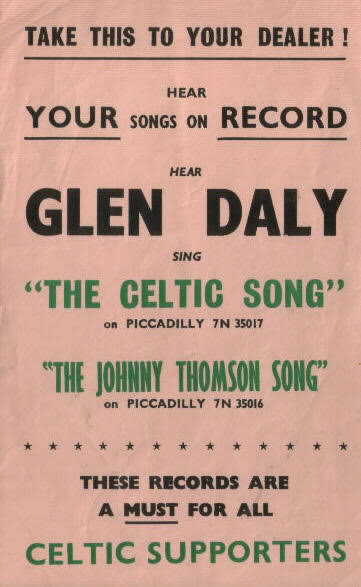
In fact, even before the recording of The Celtic Song, the “Hail! Hail!” chant was already sung on the terraces of Celtic Park. Over time, it would later become connected with Glen Daly’s tune.
In 1961 Glen Daly recorded The Celtic Song
In 1961 Glen Daly recorded The Celtic Song. He did this in Pye Records Marble Arch studio in at the same time as he also taped the Johnny Thomson song.
One tale associated with the song is that Charlie Tully had an influence on it. Daly was said to be unhappy with one section of the song and felt it needed additional lyrics. He then remembered hearing Tully belt out lyrics from a Belfast Celtic tune and adapted these.
‘Liam Mallory’
Glen Daly certainly sang the song but there has been a long-term mystery over who wrote the full words. A ‘Liam Mallory’ is credited as the artist responsible but the truth is more complicated.
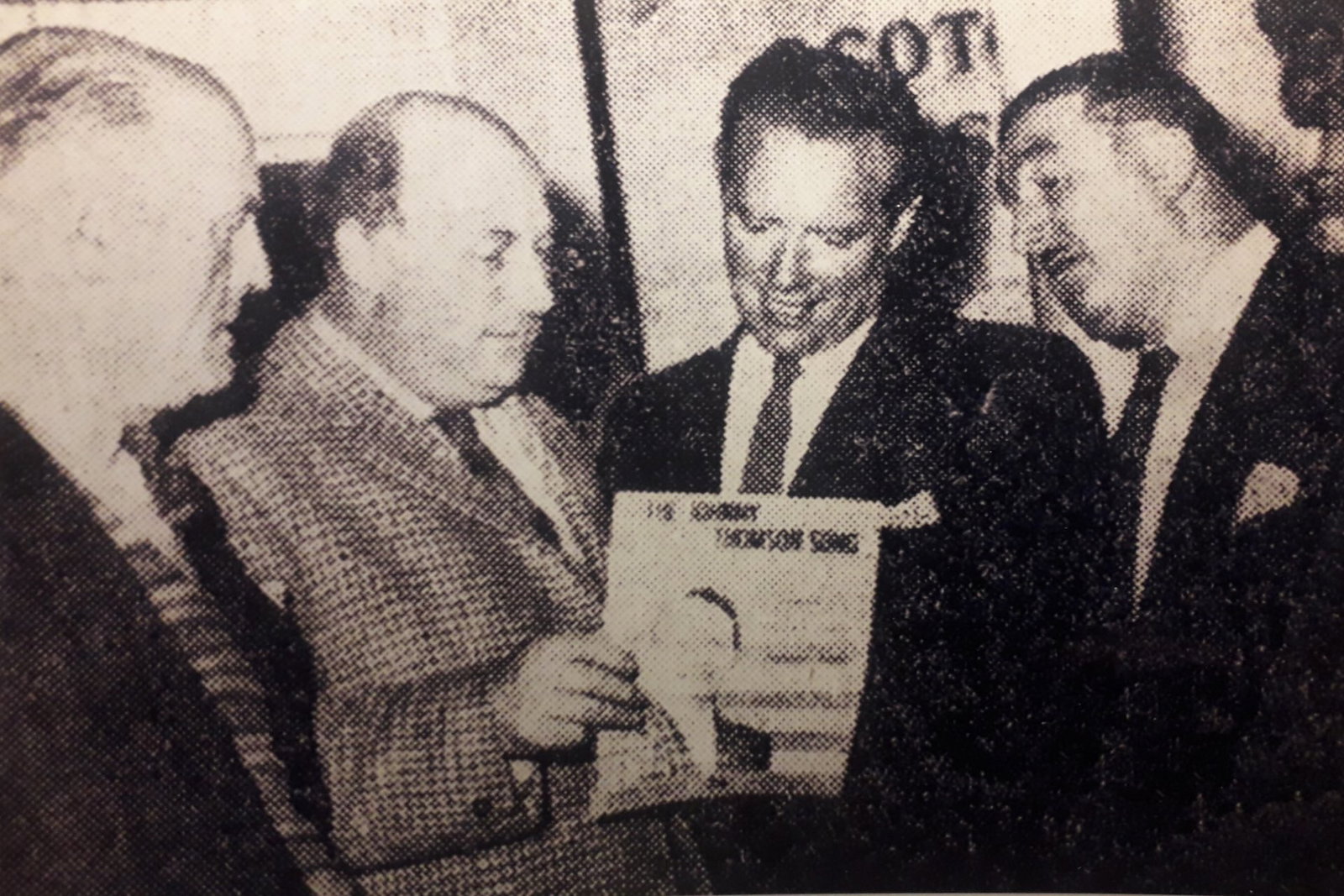
The Mallory name was simply a pseudonym. Celtic researcher Jamie Fox carried out detailed investigations and concluded that this was actually Cliff Stanton, who owned a music shop in Glasgow’s Gallowgate, opposite the famous dance hall and music venue.
Stanton certainly registered the lyrics though did not write them. For a long time, a man from Glasgow’s Garngad called Mick McLaughlin was believed to be the author. One legend states that he sold the rights to Daly for £5 although this seems unlikely.
The true identity may never be known, although it is apt that Daly is best remembered for the tune based on his singing.
22,000 fans were in the ground to hear the new tune
Whoever was behind the lyrics, now that the song had been recorded, it was time to play it at Celtic Park. The first time that happened was 14 October 1961. 22,000 fans were in the ground to hear the new tune and also celebrate Celtic beating Stirling Albion by five goals to nil.
Straight away, it proved to be a very popular song and one that was embraced by Celtic supporters. Within weeks, more than 40,000 copies of the recording had been sold and it was also performed at that year’s annual Celtic supporters’ rally in the St Andrew’s Halls.
Nevertheless, not everyone was happy. At one point, the police tried to get it banned! It was described as being “inflammatory” with one newspaper headline reading that “Police condemn new Celtic rallying song.” Fortunately, nothing came of this.
There were also rumours that there was to be a legal challenge about some sections of the song’s music, but again there was no follow-up to this.
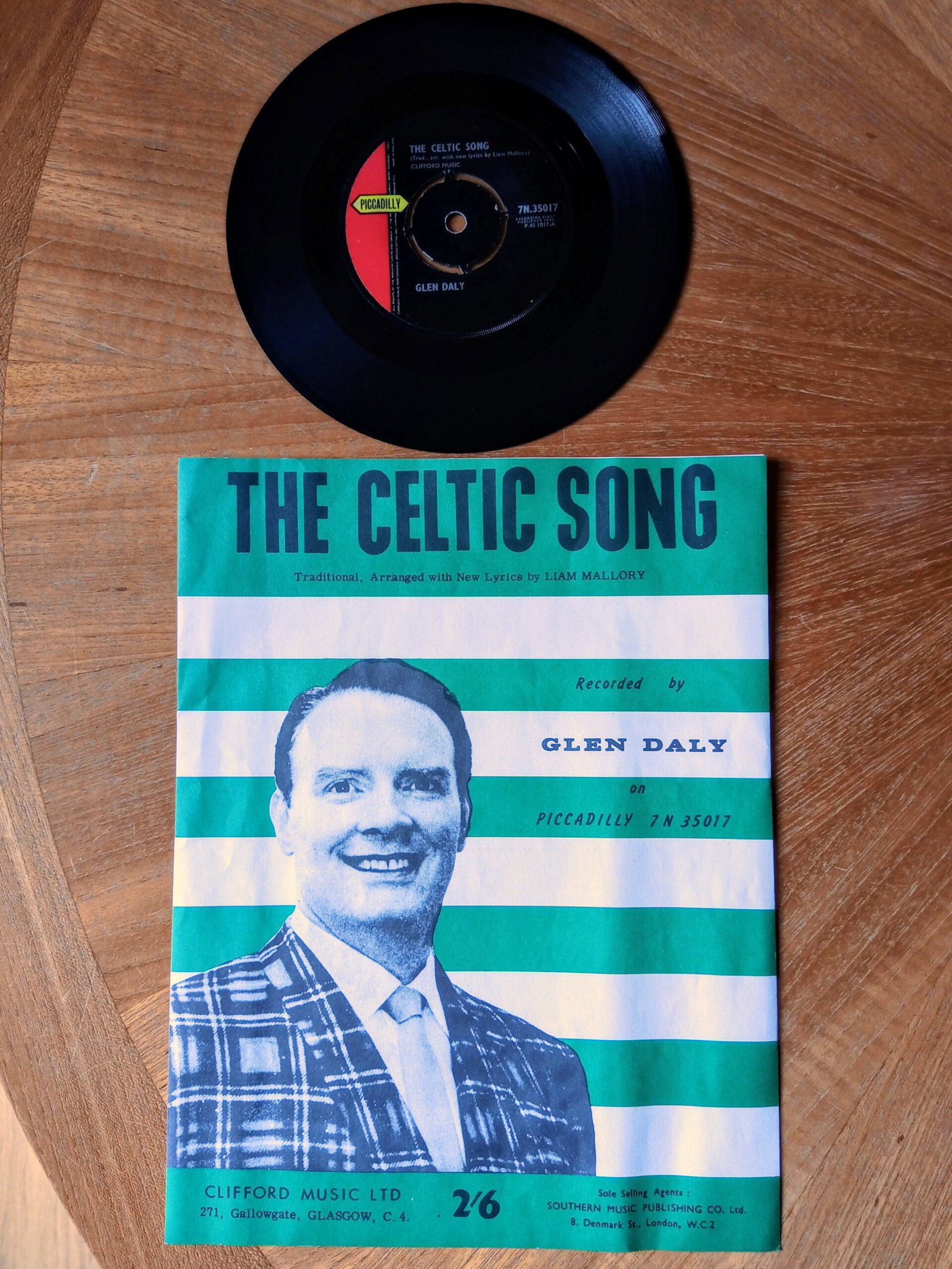
The Celtic Song did not come to light in a successful era for the club. There had been no national trophies since 1957, and would not until the arrival of Jock Stein in 1965. However, it still became a major part of the club’s identity.
The lyrics were soon sung by fans on the terraces, although they have been adapted over the decades. For instance, although most fans sing “and if you know the history” the original lyrics actually state “when you read its history.”
Just as some complained about the song, others praised it. Some journalists claimed that a positive and upbeat song about the football club was the perfect antidote to some of the more hateful tunes and chants which could be heard on the terraces. They urged other clubs to follow suit with their own such recordings.
And it is not simply Celtic fans that have come to embrace Glen Daly’s tune. Various other clubs – such as Hibs, Everton and Spurs – sing their own version of the tune, although the Celtic version will always be original and best.
It is not simply other clubs that have adopted The Celtic Song, other singers have done so too. Numerous bands which play Celtic music will perform the tune, and some more prominent artists have done so too.
Most famously, in 2011, to mark the fiftieth anniversary of the original recording, Celtic supporter and Pogues frontman Shane MacGowan recorded a new version (listen below).
Celtic have also celebrated the tune and Glen Daly’s contribution. This has included selling the record – and later re-releases – in the club shop as well as writing about Daly’s actions in various club publications.
This was also true when Daly died in 1987. He was praised for his general influence on Glasgow and Scotland’s entertainment industry, with his Celtic recording featuring in many of the tributes which were paid.
Back in 1961, Celtic were not the only team to release a special tune. That same year, in response to the success of Daly’s song, The Rangers Song by Buddy Logan was recorded.
Of course, this never matched the triumph and longevity of Glen Daly’s record. The Rangers version was soon forgotten, leaving only the Celtic Song to be heard.
This seems fitting given that this was the same fate that awaited the Ibrox club in the 2000s.
Since The Celtic Song was first recorded it has become part of the club’s DNA, not least when it is played before each match as the players step onto the pitch.
The lyrics famously state that “It’s a grand old team to play for.” But it’s also important to note that it is a “grand old song” too.
Matthew Marr
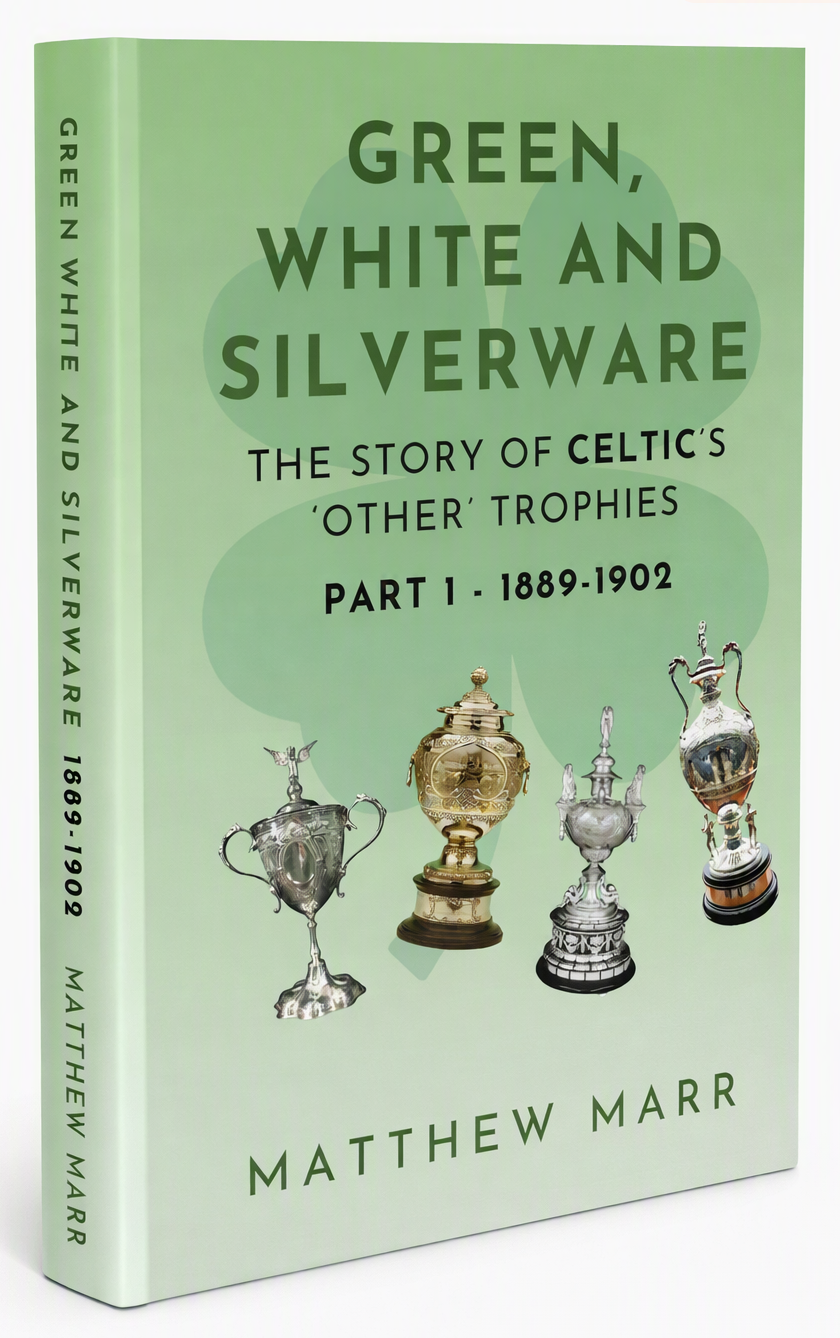
If you want to learn more about Celtic history, you can buy a new book: Green, white and silverware by Matthew Marr. This tells the story of Celtic’s less well-known trophy wins and is available now on Amazon as hardback, paperback and Kindle. You can get it HERE or simply click on the cover below to order…

1 Comment
Yes, Bartly Dick (aka Glen) was a well known figure in the Calton. Spending his later years in peaceful retirement In Rothesay, Glen was revered until his passing. Terry, his son, was a well respected teacher of English in Glasgow. Yes, the Celtic Family, in the past, now, and forever. “If you know the history”, indeed.